15 Minutes
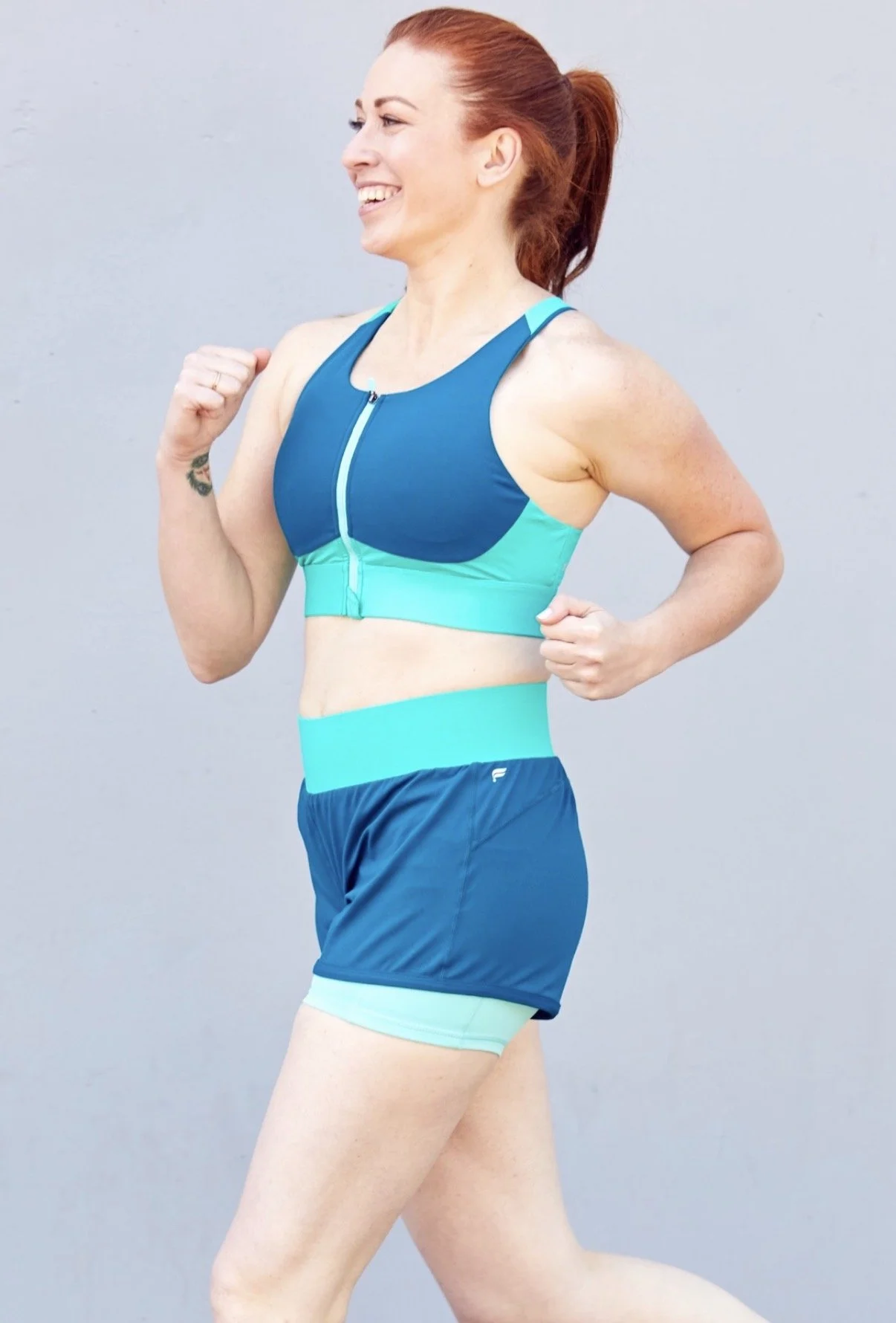
Finally ready to exercise again. It took a while, and that’s completely okay.
Healing My Relationship With My Body and Exercise After TTC, Pregnancy, and Postpartum
I was a Zumba instructor for many years. At one point, I was teaching seven Zumba classes, six days a week.
After my Zumba-teaching days, I kept moving. Dance fitness. Kickboxing. Jogging. Hiking. I was hoping to be in good physical shape when I finally got pregnant.
I kept trying and not getting pregnant. I wasn't sure if I was even able to get pregnant, but I sure as hell didn't want to start a rigorous exercise routine that could negate what the clomid was trying to do. So I did incredibly low impact moves in classes while feeling terrified that I was somehow interfering with the process.
The Science: What Stress Hormones Actually Do to Fertility
When the body perceives chronic stress, the HPA axis (hypothalamic-pituitary-adrenal axis) releases cortisol and adrenaline. Elevated cortisol can suppress the release of GnRH (gonadotropin-releasing hormone),which in turn disrupts the hormonal cascade needed for ovulation.
Research has found associations between high psychological stress and longer time-to-pregnancy, though the relationship is complex. The fear that "too much exercise" causes infertility is largely not supported by evidence for people exercising at moderate levels. However, the nervous system does not distinguish between real threats and perceived ones.
If your body believes it is under threat, it responds accordingly, regardless of whether that threat is a predator or a fertility journey.
Sources: cited in full post footnotes
I did surprisingly get pregnant, but then the losses happened. Along with the depression, grief, and hormones fluctuating before, during, and after each one.
I was going through all of it alone, far away from any real support. I turned to food, because food validated my "fuck it" attitude and gave me some much needed dopamine. Because food didn't ask me how I was doing and food didn't have anything to say about any of it.
My body kept changing, my weight kept changing, and none of it felt like it was in my control.
The Science: How Grief Gets Stored in the Body
Grief is not only an emotional experience. It is a physiological one. Research in somatic psychology and neuroscience shows that unprocessed grief and trauma are held in the body's tissues, fascia, and nervous system.
Bessel van der Kolk's foundational work demonstrated that traumatic experiences alter the brain's stress response systems, including the amygdala (fear center) and the prefrontal cortex (rational thought), making it harder for the body to return to baseline.
Repeated pregnancy loss compounds this. Each loss is a fresh activation of the grief and stress response on top of one that has not yet resolved. The body accumulates these experiences.
When food becomes a primary coping mechanism, it is the nervous system seeking regulation through dopamine in the absence of other available resources. This is not a character flaw.
It is a survival response.
Sources: cited in full post footnotes
When my last attempt at IVF actually worked, when Mayer as an embaby finally stuck, when I was finally, really, officially pregnant, I had all these plans: prenatal fitness. pelvic floor work, a whole postpartum glow up Pinterest board.
My high-risk pregnancy including severe polyhydramnios mixed with anxiety and trauma didn't leave much room for those plans. My emergency c-section left me with nerve damage, muscle spasms, and a body that went into revolt every time someone tried to touch it, work it, heal it.
It took twelve months before I could get a massage without my muscles locking up in protest.
It took until today to do fifteen minutes of cardio.
Fifteen minutes for the first time since 2022.
The Science: C-Section Nerve Damage, Spasms, and Why Recovery Is Not Linear
A cesarean section cuts through multiple layers of tissue, including skin, fascia, and muscle. The nerves in the lower abdominal wall, including the iliohypogastric and ilioinguinal nerves, are frequently affected.
Nerve regeneration is slow, typically growing at approximately 1mm per day, which means full sensation and pain-free movement can take months to years to return.
Post-surgical muscle spasms in response to touch or bodywork are a recognized phenomenon.
The nervous system, which has learned to protect the injured area, can remain in a hypervigilant state long after the tissue has healed. This is called central sensitization: the brain continues to send pain signals even after the original injury resolves, because it has learned to anticipate threat. This is not in your head. It is your nervous system doing exactly what it was designed to do.
The twelve-month marker for being able to tolerate massage is not unusual. For some people, it takes longer. The absence of a linear recovery timeline is not failure. It is biology.
Sources: cited in full post footnotes
I'm not writing this because I have it figured out. I'm writing this because somewhere between TTC, loss, fertility procedures, pregnancy, surgery, and postpartum, I lost my relationship with my own body and the exercise that used to help me keep it strong and flexible.
I didn't even realize how much I was grieving it until today, when I moved for fifteen minutes and felt something crack open.
If your body has felt like it’s broken for a while now, I see you. Start with just 15 minutes, when you’re ready.
For what it's worth, I used The Class by Taryn Toomey today. It's a somatic movement practice built around regulating the nervous system. It met me exactly where I was. I'm not affiliated. I just actually did it and it didn't break me.
I'm a therapist, not a doctor. Nothing in this post is medical advice. Before returning to exercise after pregnancy, loss, surgery, or postpartum recovery, please talk to your OB, midwife, or pelvic floor physical therapist. Your body's timeline is yours and yours alone.
