ABC, It's Easy as 1, 2, 3. As Simple as IVF?
The IVF glossary
A Story That Could Be Any Mother's This blog is a work of fiction. Names, characters, businesses, places, events, and incidents are either the product of the author's imagination or used in a fictitious manner. Any resemblance to actual persons, living or dead, or actual events is purely coincidental.
A plain-language guide to the language, procedures, and emotional labor of IVF.
Most people you'll come across will have absolutely zero clue about what really goes into IVF, and we love that for them. The only people who would be familiar with all of the protocols and abbreviations associated with IVF are the ones who HAD to. Most people do not make an appointment with a Reproductive Endocrinologist unless it's their last resort to give themselves the best chance at having a baby and a genetically viable baby.
I'm guessing no one wakes up one day and decides gleefully to spend thousands upon thousands of dollars to take a bunch of shots, blood tests, ultrasounds, and medications. They don't go in for a uterine biopsy, hysterosalpingogram, egg retrieval under general anesthesia, genetic testing, sperm analysis, and (fingers crossed) embryo transfer because it's a walk in the park.
The women and couples of all kinds who enter into the IVF universe are usually there because it's their only hope at becoming parents for the first time or as a way to expand their family after having children prior. The realities of the unknowns and uncertainties that come with being a member of the IVF club is something no one can prepare themselves for.
The emotional rollercoaster of highs and lows, fears and relief, anxieties and grief can feel so isolating to the person experiencing it, trying to share their extremely fragile fertility journey with those who know nothing about it. Perhaps they got pregnant when they tried. I'm guessing their pregnancy resulted in a live birth. It's possible they even have more than one child and never had to worry along the way.
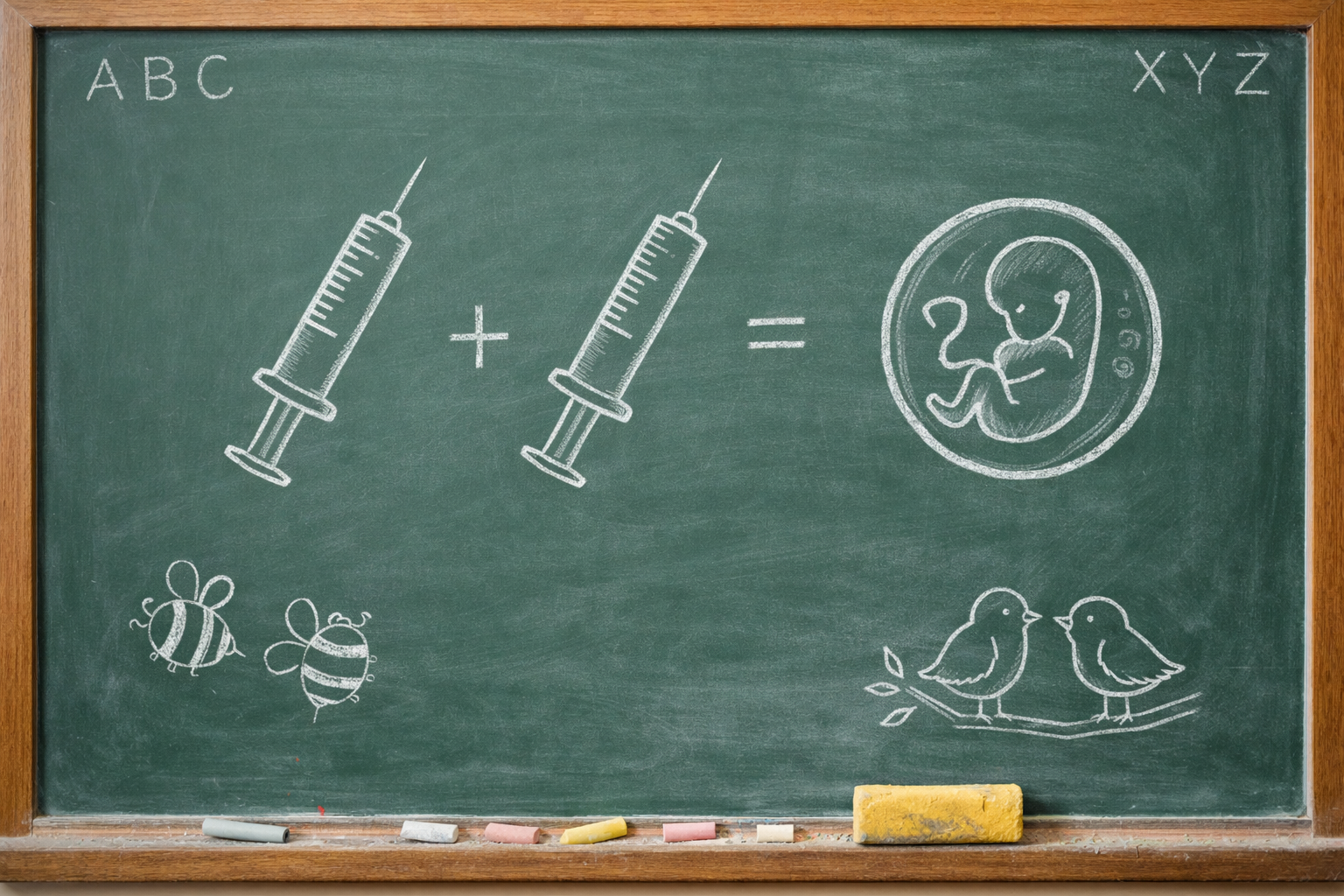
We celebrate their joy and lack of IVF awareness because that means a loss may have never occurred for them. Being a carrier for a genetic disorder never had to cross their mind. I imagine that donor conception, whether it is sperm, egg, or both, is perhaps a foreign concept. The women and men who have been untouched by the IVF experience are incredibly lucky in a way. A plus B equaled C and 1 plus 2 equaled 3.
Some of us learn in a devastating way that our math isn't mathing. Now let's clarify for a moment that no one has it perfect. People achieve conception in different ways and sometimes it results as they expected and sometimes it doesn't. Loss and disorders and disabilities can happen to anyone, and it does happen which can break your heart to even think about.
For those who had to go the IVF route because it was their best and possibly last chance at pregnancy and live birth, it can feel immensely lonely and isolating to the world outside of their IVF cycle or cycles.
When you say something along the lines of, "After my HSG came back clear, my AMH and FSH levels were good, my first egg retrieval resulted in 11 eggs, 10 mature, and 5 fertilized with ICSI leading to 4 blasts that didn't arrest and the PGT-A came back normal for 2 euploids and 1 mosaic, however one euploid is a 5AA so that'll be my top choice for transfer..." people, even a mother of 4 kids, might look at you like you just asked for an oat milk latte with stevia at an old school diner in Alabama.
When searching for any information referring to IVF on, let's say, Pinterest or Reddit, you will see that language everywhere and it can feel very intimidating and overwhelming at first. You may have it explained to you and you may just follow the suggested medical protocol and ask questions along the way. Each and every IVF experience is unique to those who encounter it. You may be surprised at who becomes open about their journey once you share that you've been there.
Fret not, we'll go through the letters, numbers, names, and everything in between together. No one needs to go through this alone. If it helps, picture yourself at the mall and you walk up to the directory because you're either lost or looking for a particular store or restaurant. You drag your finger along to find the marker that says "you're here." No judgement, no shame, just a location and awareness of where you are on the map, and that's a purposeful thing.
So here is your directory. Find where you are and go from there.
A note before we dive in: I am a licensed therapist, not a physician or reproductive endocrinologist. Everything here is for informational purposes only, drawn from patient communities, published research, and my own experience navigating this process. Nothing in this post constitutes medical advice. Please work with your RE and medical team for guidance specific to your situation.
IVF, or in vitro fertilization, is the process of retrieving eggs from the ovaries, fertilizing them with sperm in a laboratory, and transferring the resulting embryo into the uterus. It was first successfully performed in 1978. Today it accounts for more than 2 percent of all births in the United States annually, with success rates varying significantly based on age, diagnosis, and clinic. According to the CDC, the average live birth rate per egg retrieval cycle for women under 35 is approximately 40 to 50 percent, dropping to around 10 percent for women over 42 using their own eggs.
The Abbreviations: Your IVF Alphabet
Here is the shorthand you will see everywhere from Reddit threads to your clinic's patient portal. Once you know these, the language starts to make sense.
The Basics
IVF: In Vitro Fertilization. The whole process. Eggs retrieved, fertilized in a lab, embryo transferred to the uterus.
RE: Reproductive Endocrinologist. Your fertility specialist. The doctor running the show.
ART: Assisted Reproductive Technology. The umbrella term for all fertility treatments including IVF, IUI, egg freezing, and more.
TTC: Trying to Conceive. You will see this everywhere in community spaces.
IUI: Intrauterine Insemination. A less invasive procedure where sperm is placed directly into the uterus. Often tried before IVF.
FET: Frozen Embryo Transfer. When a previously frozen embryo is thawed and transferred. Most transfers today are FETs.
ER: Egg Retrieval. The surgical procedure to collect eggs from the ovaries. Not the emergency room, though it might feel like it.
ET: Embryo Transfer. The procedure where an embryo is placed into the uterus.
TWW: Two Week Wait. The excruciating stretch between transfer and your pregnancy test. Possibly the longest two weeks of your life.
BFP / BFN: Big Fat Positive / Big Fat Negative. The pregnancy test result.
Beta: Short for beta-hCG test. A blood test that measures pregnancy hormone levels after transfer. Much more sensitive than a home test.
Your Hormones and What They Measure
AMH: Anti-Mullerian Hormone. A blood test that estimates your ovarian reserve, how many eggs you have remaining. Low AMH means fewer eggs. It does not tell you about egg quality.
FSH: Follicle Stimulating Hormone. Measured on day 3 of your cycle. High FSH can indicate diminished ovarian reserve.
LH: Luteinizing Hormone. Triggers ovulation. Monitored closely during stimulation to prevent premature ovulation.
E2: Estradiol. A form of estrogen. Rises as follicles grow during stimulation. Your clinic monitors it closely throughout your cycle.
hCG: Human Chorionic Gonadotropin. The pregnancy hormone. Also used as the trigger shot to mature eggs before retrieval.
AFC: Antral Follicle Count. An ultrasound measurement of the small follicles visible in your ovaries at the start of a cycle. Helps predict how you will respond to stimulation.
P4: Progesterone. Essential for implantation and early pregnancy. Often supplemented during an IVF cycle.
Embryo Status
Blast / Blastocyst: An embryo that has developed to day 5 or 6, forming a fluid-filled cavity with distinct cell layers. Blastocysts have a higher implantation rate than earlier-stage embryos.
Euploid: An embryo with the correct number of chromosomes. 46 total, the normal human count. A euploid embryo is considered genetically normal.
Aneuploid: An embryo with an abnormal number of chromosomes. Aneuploid embryos are typically not transferred as they are unlikely to result in a healthy pregnancy.
Mosaic: An embryo with a mix of normal and abnormal cells. Not ideal but not automatically disqualifying. Your RE will advise whether a mosaic embryo is transferable.
Arrested: An embryo that stopped developing and will not be usable. One of the harder words to receive in a lab report.
PGT-A: Preimplantation Genetic Testing for Aneuploidy. Genetic testing of embryos before transfer to check chromosome numbers. Adds cost but provides information.
PGT-M: Preimplantation Genetic Testing for Monogenic Disorders. Tests for specific inherited genetic conditions.
Embryo Grading
Blastocysts are graded by their development stage and cell quality. A common grading system uses a number followed by two letters, such as 5AA or 4BB.
The number (3, 4, 5, 6): Refers to the expansion stage of the blastocyst. 5 and 6 are fully expanded and hatching. Higher is generally better.
First letter (A, B, C): Grades the inner cell mass, the cells that become the baby. A is best quality.
Second letter (A, B, C): Grades the trophectoderm, the cells that become the placenta. A is best quality.
So a 5AA is a fully expanded blastocyst with excellent inner cell mass and trophectoderm. A 4BB is slightly less expanded with good but not excellent cell quality. Both can result in healthy pregnancies.
The Diagnostic Tests: Before You Even Start
Before your first retrieval cycle, your RE will likely order a series of tests to understand your baseline and identify any factors that need to be addressed.
CMV (Cytomegalovirus): A common virus that most people have been exposed to. Your clinic will test you for it. If you test CMV negative, you should only use CMV negative sperm — whether from a partner or a donor — as exposure during pregnancy can cause serious complications for the fetus. Most people test positive, which makes finding a CMV negative donor significantly harder. It’s one of those results that can quietly reshape your entire plan.
HSG (Hysterosalpingogram): An X-ray procedure using dye to check whether your fallopian tubes are open and your uterine cavity looks normal. Uncomfortable for most people. Important information.
Saline Infusion Sonogram (SIS): A gentler alternative to HSG that uses saline and ultrasound to examine the uterine cavity for polyps, fibroids, or structural issues.
Endometrial Biopsy: A small sample of the uterine lining taken to check for abnormalities and assess receptivity. Not the most comfortable experience.
ERA (Endometrial Receptivity Array): A test that analyzes the uterine lining to identify the optimal timing for embryo transfer. Not standard but sometimes recommended after failed transfers.
Semen Analysis: A lab evaluation of sperm count, motility (movement), and morphology (shape). Often one of the first tests ordered for male partners or donors.
Karyotype: A chromosomal analysis of the patient or partner. Checks for structural chromosomal issues that could affect embryo quality or recurrent loss.
Carrier Screening: Genetic testing to determine if you or your partner carry genes for inherited conditions that could be passed to a child.
Day 3 Bloodwork: Hormone levels tested on cycle day 3, including FSH, LH, and estradiol. Gives a baseline picture of ovarian function.
The Medications: What You Are Actually Injecting
One of the first things people realize when they enter an IVF cycle is that it involves a lot of injections. Here is what each category of medication is doing.
Stimulation Medications
These medications stimulate your ovaries to produce multiple follicles and eggs instead of the single egg your body would naturally release.
Follistim / Gonal-F / Puregon: Injectable FSH medications. The workhorses of stimulation. Used to grow multiple follicles.
Menopur: A combination of FSH and LH derived from the urine of postmenopausal women. Often used alongside FSH-only medications.
Clomid (Clomiphene): An oral medication that stimulates follicle development. Less aggressive than injectables. Sometimes used in mini-IVF protocols.
Letrozole: An aromatase inhibitor sometimes used for stimulation, particularly in people with PCOS or those who respond poorly to other medications.
Suppression and Control Medications
These prevent your body from ovulating prematurely before the eggs can be retrieved.
Lupron (Leuprolide): A GnRH agonist that initially causes a flare of hormones before suppressing the body's natural cycle. Used in longer protocols.
Cetrotide / Ganirelix: GnRH antagonists that prevent premature ovulation. Used in shorter antagonist protocols and taken when follicles reach a certain size.
The Trigger Shot
The trigger shot is administered at a very precise time, usually 36 hours before retrieval, to complete egg maturation.
hCG Trigger (Pregnyl, Novarel, Ovidrel): Mimics the natural LH surge to trigger final egg maturation.
Lupron Trigger: Sometimes used instead of hCG, particularly for people at high risk of OHSS.
Dual Trigger: A combination of both hCG and Lupron, used to optimize egg maturity in some protocols.
Luteal Phase and Transfer Support
After retrieval and during a transfer cycle, these medications prepare and support the uterine lining.
Progesterone in Oil (PIO): An intramuscular injection that supports the uterine lining and early pregnancy. The needle is long. The injection site gets sore. Ask about rotating spots.
Endometrin / Crinone: Vaginal progesterone suppositories or gel. An alternative to PIO for some patients.
Estrogen (Estrace, Vivelle patches): Used to build the uterine lining before a frozen embryo transfer.
Prednisone: A corticosteroid sometimes added to protocols to modulate immune response and improve implantation. Part of many immune protocols.
Baby Aspirin: Low-dose aspirin often recommended to improve blood flow to the uterus.
Pepcid (Famotidine): An H2 blocker sometimes included in immune protocols.
Zyrtec (Cetirizine): An antihistamine occasionally included in immune protocols targeting inflammation.
HGH (Human Growth Hormone): Sometimes added to stimulation protocols for poor responders to improve egg quality and quantity.
Other Medications You Might Encounter
Metformin: Used for people with PCOS or insulin resistance to improve ovarian response.
DHEA: A hormone supplement sometimes recommended for women with diminished ovarian reserve to improve egg quality over time.
CoQ10: An antioxidant supplement with some evidence for improving egg and sperm quality.
Lovenox (Enoxaparin): A blood thinner sometimes prescribed for people with clotting disorders or recurrent loss.
IVIG: Intravenous immunoglobulin. Used in complex immune cases.
The Procedures: From Start to Transfer
Baseline Monitoring
Before stimulation begins your RE will do a baseline ultrasound and bloodwork to check your antral follicle count, hormone levels, and confirm there are no cysts that would interfere with the cycle.
Stimulation and Monitoring
Once you start stimulation medications you will come in every two to four days for ultrasounds and bloodwork to monitor your follicle development. Your RE is watching the follicles grow and adjusting your medication doses accordingly.
Follicle monitoring: Transvaginal ultrasound to measure the size of each follicle. You are aiming for multiple follicles reaching approximately 18 to 20mm before trigger.
Stimming: The informal term for the stimulation phase. When people say they are stimming they are in the active injection phase of the cycle.
Egg Retrieval
Egg Retrieval (ER): A minor surgical procedure performed under light sedation or general anesthesia. A thin needle guided by ultrasound passes through the vaginal wall into each follicle to aspirate the fluid containing the egg. Takes approximately 20 to 30 minutes. You will be groggy and may have cramping and bloating afterward.
Mature Eggs: Not every egg retrieved will be mature enough to fertilize. Mature eggs, called MII oocytes, have completed the first stage of meiosis and are ready for fertilization.
Immature Eggs: Eggs that were retrieved but not yet ready for fertilization. Some clinics attempt to mature them in the lab (IVM) with variable success.
Fertilization
Conventional IVF: Eggs and sperm are placed together in a dish and fertilization happens naturally. Used when sperm quality is normal.
ICSI (Intracytoplasmic Sperm Injection): A single sperm is injected directly into each egg. Used for male factor infertility, poor fertilization history, or as a standard approach at many clinics.
Fertilization Check: Approximately 16 to 18 hours after retrieval, the lab checks which eggs have fertilized. Fertilized eggs are called 2PN, meaning two pronuclei are visible.
Embryo Development
After fertilization, embryos are cultured in the lab for 5 to 6 days, developing from a single cell through the cleavage stage and into a blastocyst. The lab will update you on how many are developing.
Day 3 Embryo: An embryo at the cleavage stage, typically 6 to 8 cells. Some clinics transfer at this stage though Day 5 blastocyst transfers are more common today.
Day 5/6 Blastocyst: The preferred stage for transfer and biopsy. Embryos that reach blastocyst have demonstrated developmental competence.
Attrition: The normal and expected drop-off at each stage. Not all retrieved eggs will be mature. Not all mature eggs will fertilize. Not all fertilized eggs will reach blastocyst. This is part of the process, not a failure.
Genetic Testing
Biopsy: A small number of cells from the trophectoderm of the blastocyst are removed and sent to a genetics lab for analysis. The embryo is then vitrified while waiting for results.
Vitrification: Flash freezing of eggs or embryos using a rapid cooling technique. The standard method of cryopreservation today.
PGT-A Results: Typically returned within 7 to 14 days. Each embryo will be reported as euploid, aneuploid, mosaic, or no result if the biopsy did not yield usable cells.
Embryo Transfer
Fresh Transfer: An embryo transferred in the same cycle as retrieval, before freezing. Less common now that most clinics prefer FETs.
Frozen Embryo Transfer (FET): The uterine lining is prepared with estrogen and progesterone, then a thawed embryo is placed into the uterus using a thin catheter. Most patients describe it as similar to a pap smear.
Natural FET: Transfer timed to your natural cycle without medication.
Medicated FET: Transfer using estrogen and progesterone to control the cycle timing.
eSET (Elective Single Embryo Transfer): The practice of transferring one embryo at a time to reduce the risk of multiples. Recommended by most REs.
Conditions You Might Hear About
OHSS (Ovarian Hyperstimulation Syndrome): An excessive response to stimulation medications causing the ovaries to become swollen and painful. Mild cases are common. Severe cases require medical attention. A freeze-all cycle may be recommended if OHSS risk is high.
DOR (Diminished Ovarian Reserve): Fewer eggs remaining than expected for age. Lower AMH, higher FSH, lower AFC. Does not necessarily mean IVF will not work, but may mean fewer embryos.
PCOS (Polycystic Ovary Syndrome): A hormonal condition that can affect ovulation and fertility. People with PCOS often respond strongly to stimulation and are at higher risk for OHSS.
Endometriosis: A condition in which uterine-like tissue grows outside the uterus, often affecting fertility.
Recurrent Implantation Failure (RIF): When multiple transfers of good quality embryos have not resulted in pregnancy. May prompt additional testing including ERA, immune panels, and uterine evaluation.
Recurrent Pregnancy Loss (RPL): Two or more pregnancy losses. May warrant additional genetic and immune testing.
Unexplained Infertility: When no specific cause is identified after standard testing. Frustrating. More common than you might think.
Thin Lining: An endometrial lining below the minimum threshold for transfer, typically considered to be 7mm. Various interventions exist to improve lining thickness.
Chemical Pregnancy: A very early pregnancy loss detected by beta-hCG before a gestational sac is visible on ultrasound.
A Sample IVF Cycle: What the Timeline Actually Looks Like
Every cycle is different and every clinic has its own protocols. This is a general picture of what a retrieval cycle followed by a frozen embryo transfer might look like.
The Retrieval Cycle
Cycle Day 1: Period starts. You call the clinic to report Day 1 and schedule your baseline appointment.
Cycle Day 2-3: Baseline ultrasound and bloodwork. AFC checked. Hormones confirmed. Stimulation medications prescribed.
Day 3-4: First injections begin. You are stimming. Typically one to two injections per day.
Day 5-6: First monitoring appointment. Ultrasound and bloodwork to check follicle development. Medications adjusted if needed.
Day 7-9: Additional monitoring appointments every 1-2 days. Follicles growing. Antagonist medication may be added to prevent premature ovulation.
Day 10-12: Follicles approaching maturity. Trigger timing determined. You administer the trigger shot at a very specific time, usually late at night.
36 hours post-trigger: Egg retrieval. You arrive fasted. Procedure takes approximately 20-30 minutes under sedation. You go home to rest.
Day after retrieval: Fertilization report. How many eggs were mature. How many fertilized.
Day 3: Cleavage stage report. How many embryos are still developing.
Day 5-6: Blastocyst report. How many reached blast. Biopsies sent for PGT-A if testing. Embryos vitrified.
7-14 days later: PGT-A results returned.
The Frozen Embryo Transfer Cycle
Cycle Day 1: Period starts. Call clinic. Begin estrogen to build lining.
Days 7-10: Monitoring ultrasound to check lining thickness and appearance.
Day 10-14: Lining check. If lining is ready (typically 7mm or above with trilaminar appearance), progesterone is added.
Progesterone Day 5-6: Transfer day. The embryo has been thawed. Transfer takes approximately 5-10 minutes. You will see it on the ultrasound screen, a small white flash.
5-6 days post-transfer: Beta-hCG blood test. The two week wait is actually closer to 10 days.
If positive: Second beta 48 hours later to confirm levels are rising appropriately.
6-7 weeks: First ultrasound to look for a heartbeat.
IVF success rates vary significantly by age. The CDC reports that for women using their own eggs, the live birth rate per retrieval cycle is approximately 40-50% for women under 35, 32% for women 35-37, 20% for women 38-40, 10% for women 41-42, and 5% or less for women over 42. These numbers improve with PGT-A testing and frozen embryo transfer. Using donor eggs significantly improves outcomes regardless of recipient age.
You did not choose to learn this language. You learned it because you had to, in waiting rooms and at kitchen tables at midnight and in Reddit threads at 2am when no one in your life was awake to talk. That makes you fluent in something most people will never need to know.
You are not alone in it. And now you have the directory.
The Hail Mary: When You Add Everything You Can Think Of
There comes a point in some fertility journeys when a patient and their RE look at each other after another failed transfer and essentially say: what else can we try? This is sometimes called the kitchen sink protocol or the hail mary protocol. There is no single official protocol by that name. It is a colloquial term for a cycle where multiple add-ons and adjuvants are layered together in the hope that something in the combination makes the difference.
These protocols are typically used after recurrent implantation failure, meaning multiple transfers of good quality embryos that have not resulted in pregnancy. The honest truth is that many of these additions are not definitively proven by large randomized controlled trials. They are used because the potential benefit is thought to outweigh the risk, and because when you have been through what these patients have been through, the answer to what else can we do matters enormously.
The American Society for Reproductive Medicine notes that while many add-on immunotherapies have been introduced into IVF treatment to address recurrent implantation failure, the evidence base remains limited and many treatments have not been sufficiently studied to make definitive recommendations. This does not mean they do not work for specific patients. It means the research has not yet caught up with clinical practice.
Here are the additions most commonly discussed in the context of enhanced or kitchen sink protocols:
Intralipid Infusion: An intravenous fat emulsion. Thought to reduce the activity of natural killer cells that may be attacking the embryo. Given in the days before transfer and sometimes repeated in early pregnancy.
IVIG (Intravenous Immunoglobulin): Human antibodies administered intravenously to modulate the immune response. Used for elevated NK cell activity and recurrent implantation failure. Expensive and not universally covered by insurance.
HGH (Human Growth Hormone): Added to stimulation protocols for poor responders. Some REs also add it to transfer cycles to support implantation. Evidence is mixed but some patients respond well.
LDN (Low Dose Naltrexone): Originally developed to treat addiction, used off-label as an immunomodulator that may improve the body's self-healing response. Not standard but appearing in more protocols.
Neupogen (G-CSF): A medication that stimulates white blood cell production. Sometimes used as a uterine wash or systemic injection to improve endometrial receptivity in thin lining cases. Investigational.
Endometrial Scratching: A procedure where the uterine lining is gently scratched in the cycle before transfer to create an inflammatory response thought to improve implantation. Evidence is mixed.
Uterine Natural Killer Cell Testing: Blood tests measuring NK cell activity to determine whether immune suppression may help. Controversial because peripheral blood NK levels do not always correlate with uterine NK activity. Some clinics use this to guide treatment. Others do not.
ERA (Endometrial Receptivity Array): Genetic testing of the uterine lining to identify the personalized window of implantation. Some patients whose transfers were failing at a standard timing find success with ERA-guided timing.
Assisted Hatching: A procedure where a small opening is made in the outer shell of the embryo before transfer. Thought to help older embryos or those with thick shells implant more easily.
Embryo Glue (EmbryoGlue): A transfer medium containing hyaluronan that is thought to improve embryo adhesion to the uterine lining. Low cost. Some clinics add it routinely.
The Immunology Protocol: When Your Body May Be Working Against You
One of the more complex and emotionally heavy conversations in the IVF world happens when the embryos look good, the lining looks good, and transfers keep failing anyway. At that point, some REs begin looking at immune factors. The idea is that in some people, the immune system, whose job is to identify and eliminate foreign cells, may be treating the embryo as a threat rather than welcoming it.
Reproductive immunology is a specialized and sometimes controversial field. Protocols vary significantly between clinics and countries. If your RE does not offer immune testing or treatment, a reproductive immunologist may be a useful second opinion.
The CPP Protocol
One of the most commonly used immune protocols goes by different names in different countries. In the United States it is often called the CPP protocol. In Australia it is known as the Bondi Protocol. The core components are corticosteroids and a blood thinner.
Prednisone or Prednisolone: A corticosteroid that suppresses the immune response. Used to reduce NK cell activity and create a more receptive uterine environment. Typically started before transfer and continued into early pregnancy.
Baby Aspirin: Low-dose aspirin to improve blood flow to the uterus. Often included as a baseline addition.
Lovenox (Enoxaparin) or Heparin: A blood thinner used when there is a history of clotting issues or antiphospholipid syndrome, and sometimes empirically in cases of recurrent failure. Given by injection.
Pepcid (Famotidine): An H2 blocker with immunomodulating properties. Part of some immune protocols. Over the counter but prescribed as part of the combination.
Zyrtec (Cetirizine) or Claritin (Loratadine): Antihistamines included in some protocols to reduce inflammation. Part of the combination approach.
A 2022 study published in the American Journal of Reproductive Immunology examined the Bondi Protocol, a combination of prednisolone and enoxaparin, in women with repeated IVF failure and high NK cell activity. The study found live birth rates were over four times higher when the protocol was used compared to standard protocols in that patient group. The research is promising but further large randomized controlled trials are still needed.
What the Immune Protocol Is Trying to Do
The immune system recognizes the embryo as genetically foreign because it contains the DNA of the other biological parent. In a successful pregnancy the immune system learns to tolerate this. In some people it does not, or it overreacts. The medications in immune protocols are trying to create what researchers call immunological tolerance. A uterine environment that welcomes rather than attacks the embryo.
Natural Killer (NK) Cells: Immune cells whose job is to destroy foreign cells. In the uterus, some NK cell activity is normal and actually necessary for implantation. Elevated or overactivated NK cells are associated with recurrent implantation failure and recurrent pregnancy loss.
Th1/Th2 Balance: Two types of immune responses. A Th1 dominant environment is associated with immune rejection. A Th2 dominant environment is associated with tolerance and successful implantation. Immune protocols aim to shift toward Th2.
Antiphospholipid Antibodies (APA): Antibodies associated with clotting and recurrent pregnancy loss. Testing for these is often part of the workup for recurrent failure.
Antithyroid Antibodies: Thyroid autoantibodies associated with implantation failure and miscarriage in some patients.
Reproductive Immunologist: A specialist who focuses specifically on immune factors in fertility. If multiple transfers of good quality embryos have failed without explanation, a consultation with a reproductive immunologist may open new avenues.
Not every clinic will offer immune testing or treatment. Not every patient needs it. But for the person who has done everything right and keeps hearing that the embryo looked perfect and the transfer looked perfect and we just don't know why it didn't work, knowing that immune factors exist and can be investigated is an important piece of information to have.
Here is something your RE may not tell you. Inflammation and immune dysregulation do not always show up on standard pre-transfer tests. Sometimes they only become detectable once you are already pregnant. Which means a cycle can fail for immune reasons that the workup never flagged. A lot of what patients know about immune protocols they learned not from their doctors but from subreddits and patient blogs written by people who kept failing and kept researching until something worked.
HGH, or human growth hormone, is one of those things many patients read about in community spaces before ever hearing it mentioned in a clinical setting. For patients with diminished ovarian reserve or repeated implantation failure, HGH has been added to both stimulation and transfer protocols with some promising results. The evidence is still building but for some patients the combination of HGH with immune support medications like prednisolone appears to make a meaningful difference. This is not a blanket recommendation. It is an acknowledgment that the conversation between what patients are researching and what clinics are offering is not always happening as quickly as it should.
You are allowed to ask for the kitchen sink. You are allowed to ask about immune protocols. You are allowed to bring what you read on Reddit to your RE's office and ask whether it applies to your situation. You are allowed to push for more investigation when the standard answers are not enough. The gap between what the tests show and what is actually happening is real. The patients who fill that gap by becoming their own advocates are not being difficult. They are doing what the system has left them to do.
Sources
Centers for Disease Control and Prevention. (2023). Assisted Reproductive Technology National Summary Report. https://www.cdc.gov/art/reports/index.html
American Society for Reproductive Medicine. (2022). Patient fact sheets and booklets. https://www.reproductivefacts.org
Society for Assisted Reproductive Technology. (2023). IVF success rates. https://www.sart.org
Boston IVF. (2024). IVF glossary: A dictionary of fertility terms and abbreviations. https://www.bostonivf.com
CNY Fertility. (2025). Fertility acronyms and terms: Your complete TTC glossary. https://www.cnyfertility.com/fertility-acronyms
MCRM Fertility. (2024). IVF and fertility terms glossary. https://www.mcrmfertility.com/learning-center/mcrm-glossary
If you are located in Florida, California, or Tennessee and are looking for individual support, I would love to work with you. Learn more about therapy services at bethsiller.com.
Not in one of those states? Beth offers virtual workshops and professional trainings available nationwide. Find out more at bethsiller.com.
This post is for informational purposes only and does not constitute therapy or medical advice. Beth P. Siller, LMFT is a licensed therapist, not a physician. Please consult a qualified medical or mental health professional for personalized support.
