Matrescence: The Birth of a Mother
You didn’t just have a baby, you became someone new. Let’s start talking about what that actually costs.
Virtual matrescence therapy for mothers navigating identity transformation, available in Florida, California, and Tennessee.
You’re Not Lost, You’re in the Middle of Something.

People keep telling you how much you’ve changed. They say it like they don’t even know you anymore. Like the version of you that existed before is the one they miss, and this one, the one standing here, is a problem to be solved or a phase to get through.
Somewhere underneath it all, you’re wondering the same thing:
Who is this person?
Where did she come from?
Where did the other one go?
How do I put any of it back together when I don’t even know what the pieces are supposed to look like anymore?
This is matrescence.
It’s the developmental transformation that happens when a woman becomes a mother. It’s as profound and disorienting as adolescence was and it’s a complete reorganization of your identity, body, relationships, and selfhood. Unlike adolescence, this is a transformation that no one warns you it’s coming.
No one names it.
No one tells you that feeling ripped open does not make you defective, that the grief is real and that you are not failing at motherhood.
You are in the middle of becoming someone new.
That experience alone is one of the most disorienting things a human being can go through. You don’t need to put the pieces back together like how they used to be, but you do deserve support while you figure out what they’re becoming.
What Matrescence Actually Feels Like
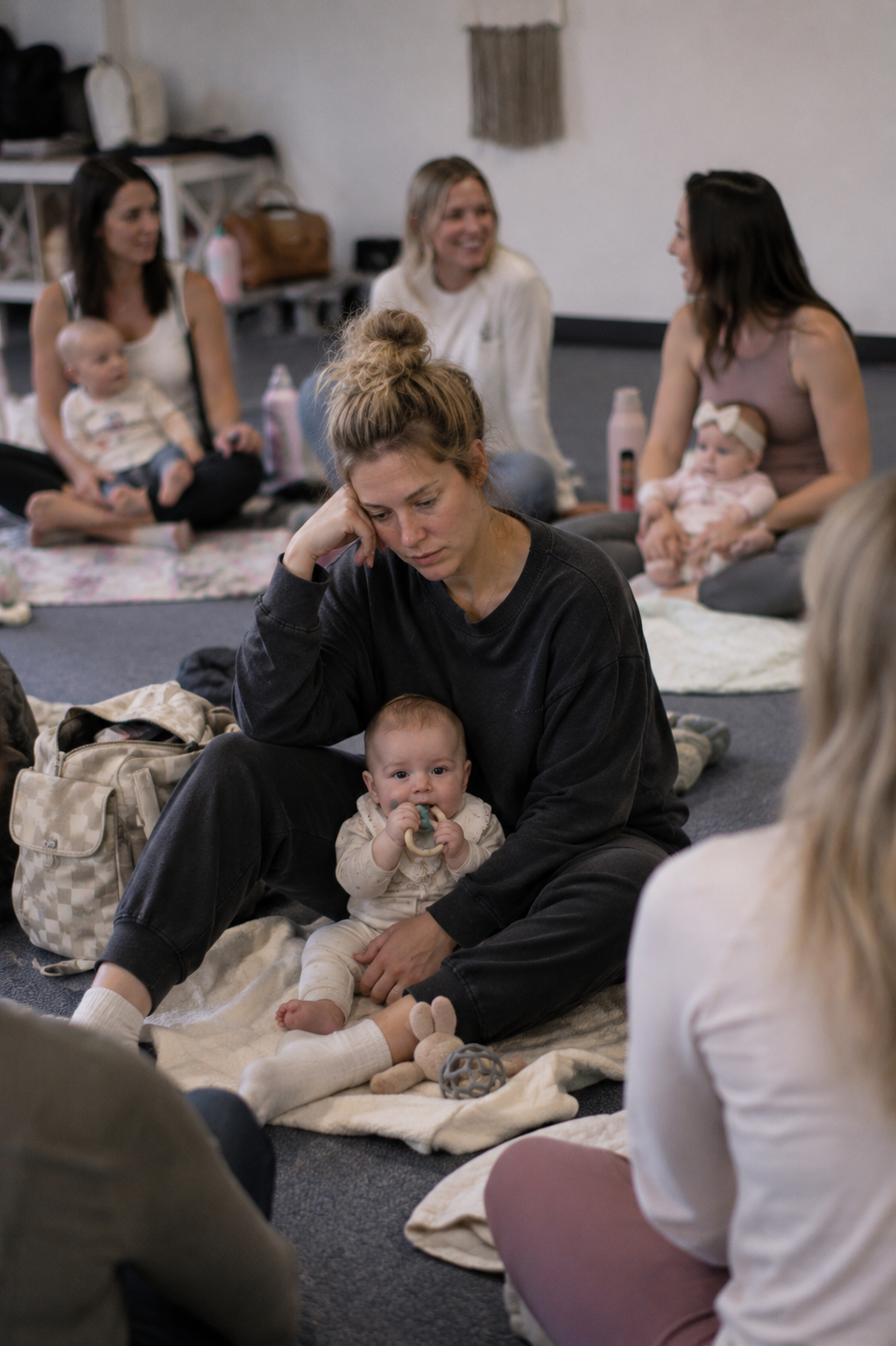
It doesn’t always look like what you expected a crisis to look like. It doesn’t announce itself as grief or loss or an identity rupture. It shows up quietly, in the spaces between the moments you’re supposed to be grateful for.
It can look like:
• Loving your child completely and still mourning the life you had before
• Feeling invisible in rooms you used to feel confident in
• Not recognizing yourself in the mirror, in your relationships, in your own reactions
• Resenting the expectation that motherhood should feel like enough
• Grieving friendships that couldn’t embrace of who you’re becoming
• Feeling pressure to perform a version of motherhood that doesn’t fit
• Wondering if you made a mistake, and the shame that follows that thought
• Missing yourself, specifically, by name
Why This Doesn’t Just Resolve on Its Own
Matrescence is not postpartum depression, though they can coexist. It is not a mood disorder. It is not something that gets better once the baby sleeps through the night, you go back to work, you lose the weight, or you find your routine.
It is an identity shift. And identity shifts require space to be processed, not fixed, not rushed, not performed out of.
The culture around new motherhood is not built for this. It is built for gratitude and adjustment and getting back to yourself as quickly as possible. It does not have much patience for a woman who is grieving the self she was, questioning the self she’s becoming, and trying to figure out who she is in a body and a life that no longer feel entirely like hers.
When there is no space for that grief, it doesn’t go away. It goes sideways.
It shows up as:
• Rage that feels out of proportion but isn’t
• Numbness where you expected to feel connected
• Resentment toward the people closest to you
• A creeping sense that you are disappearing
• Exhaustion that sleep doesn’t fix
• The feeling that everyone else has figured something out that you haven’t
Why Work With Me
This is matrescence therapy: support built specifically for the identity shift no one prepared you for, not generic postpartum support that assumes the only problem is your mood.
I know matrescence from the inside and what it is to become a mother as the ground shifts beneath you.
When everything you thought you knew about yourself, your identity, your relationships, and your sense of what your life was supposed to look like becomes unrecognizable.
What it’s like to navigate matrescence without a GPS or someone naming what was happening.
When it feels like the world isn’t giving you permission to grieve what was changing alongside everything you were gaining, it may be time to talk to someone.
This work can provide the space to be exactly where you are in this, without having to make it more acceptable, more grateful, or more resolved than it actually is.
It’s not about finding a way back to who you once were or a faster path to who you’re supposed to as a mom, it’s about finding a way to trust the process.
Virtual matrescence therapy for mothers in Florida, California, and Tennessee.
You Are Allowed to Be Both Things
You can love your child and grieve your former self. You can be grateful and devastated. You can be a good mother and still feel like you’ve lost something real.
These are not contradictions. They are the honest texture of matrescence.
It’s every moment you kept going when you didn’t recognize yourself
It’s every time you showed up for your child while quietly wondering where you went
It’s every day you feared becoming someone new without anyone acknowledging how scary and isolating that can feel.
You were not falling apart, you were transforming, and you deserved for someone to tell you that while it was happening.
The old you is not coming back, but with that loss comes who you are becoming; slowly, imperfectly, and without a clean timeline.
That woman is worth knowing.
FAQ Section
Matrescence Therapy: Common Questions
-
Matrescence therapy is support for the identity transformation that happens when you become a mother. It is not focused on symptom relief alone. It gives you space to process who you were, who you are now, and who you are still becoming.
-
Postpartum depression is a mood disorder. Matrescence is a developmental shift, the same way adolescence is. You can be doing well clinically and still be in the middle of matrescence. The two can coexist, but one is not the other, and matrescence therapy treats it as its own thing worth naming.
-
Yes. I offer virtual matrescence therapy to clients in Florida, California, and Tennessee, so you can do this work from wherever you actually are, not wherever a waiting room happens to be.
-
If you are grieving who you were, unsure who you are becoming, and no one around you seems to be naming any of it, that is usually a sign this work would help. We can figure out together what you actually need once we talk.
Start Matrescence Therapy
If you are somewhere in the middle of this, not sure who you are anymore, not sure how to explain it to the people around you, and not sure if what you’re feeling is normal or something more, this is a space for that.
Virtual therapy for matrescence and identity transformation is available in Florida, California, and Tennessee.